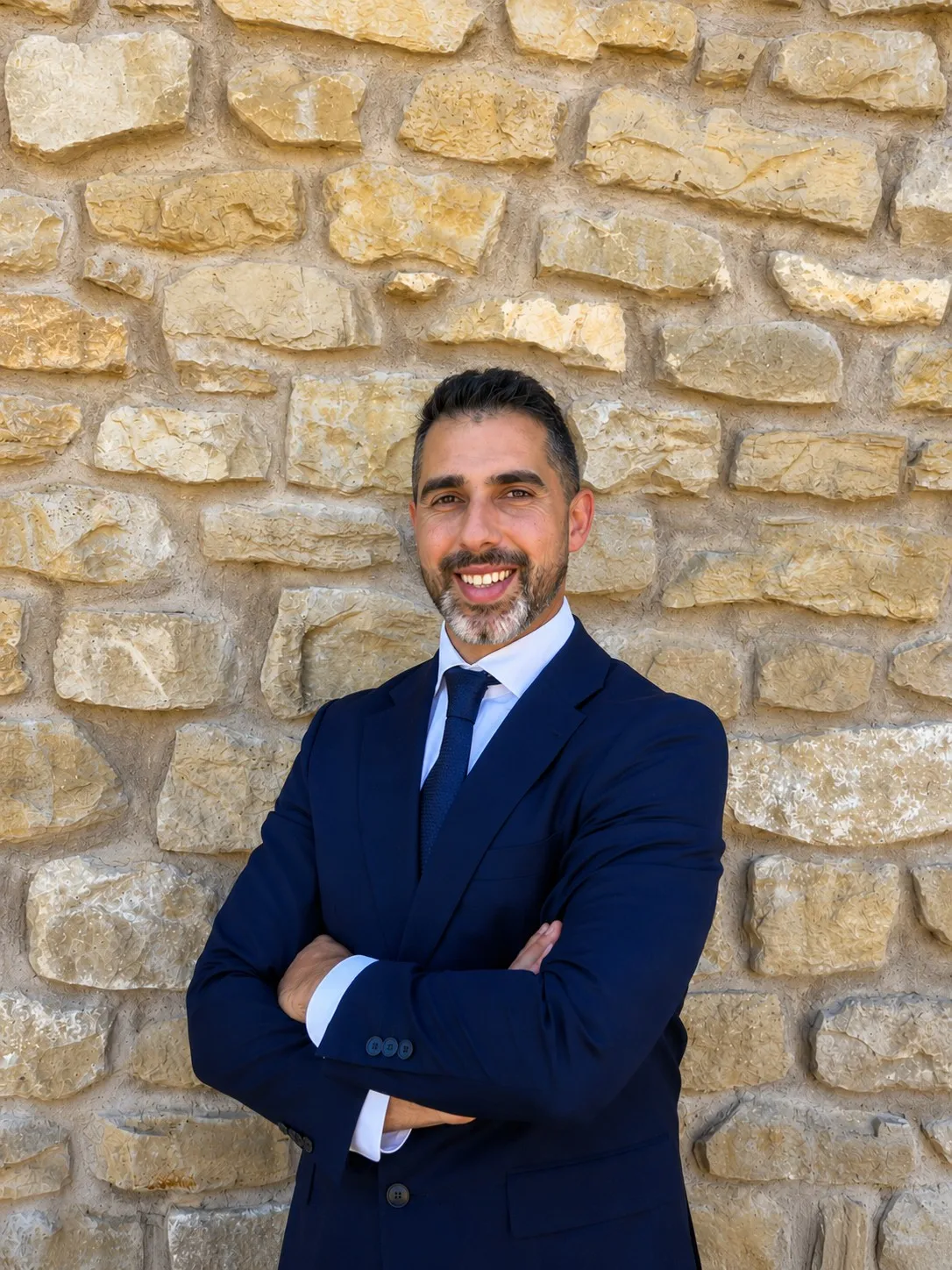
Jorge García experiences wine from one of the most privileged stages in the world: the dining room of Marqués de Murrieta. As Head Sommelier of one of Rioja’s great historic estates, every service means opening, interpreting, and sharing some of the most admired labels on the international wine scene.
But beyond the great wines, Jorge understands wine as a deeply human experience. His way of speaking about a bottle never stays only within the technical; he talks about memories, emotion, the table, and people. Perhaps that is why he is so easy to listen to: because behind the knowledge there is sensitivity, curiosity, and an honest way of living this profession.
Between memorable uncorkings, great vintages, and endless conversations around a glass, Jorge represents a new generation of wine professionals who understand that wine should not only impress, but also move people and bring them closer together. He has been one of our students this year, and we shared this dialogue and toast with him.
— Jorge, would there be wine without the wider public?
Jorge smiles before answering. He does not speak about wine as an object, but as something that happens between people.
“Wine is born to be shared. Without the wider public, it would lose a great part of its meaning. Even if it could still exist as a cultural, agricultural, or even collectible product, for me wine accompanies conversations, celebrations, gastronomy, and everyday moments; that is where it truly comes alive, framing memories.”
And perhaps that is one of the keys to this new era of wine: understanding it once again through the lens of human experience. For years, the sector has focused on technical knowledge — and it remains essential — but today it is also necessary to translate, inspire, and accompany. Because today’s consumer is not only looking for information; they want to feel part of something.
— From your perspective, how would you bring more people closer to wine?
“By making wine more accessible and less intimidating. Sometimes the sector uses language that is too technical, and that can create distance. I believe wine should be spoken about through emotion, experiences, and above all enjoyment. When someone understands that they do not need to know everything in order to enjoy a glass, that is when they truly begin to enjoy wine.”
At The Wine Studio, we deeply share that vision: combining technical excellence with closeness, helping professionals, wineries, and companies communicate better, build identity, and create genuine connections with their clients. Because today it is not enough to make great wines; you also need to know how to tell their story — and above all, how to make others want to discover them.
The world of wine is going through a moment with more competition than ever between regions, brands, and styles. That landscape creates uncertainty, but it also opens enormous opportunities. Jorge knows that we support projects that need more than occasional training: strategy, external perspective, commercial sensitivity, and tools to grow with authenticity.
When we ask him what defines a successful wine, he does not speak about scores or passing trends:
“For me, a successful wine is one that achieves balance between identity, quality, and emotion. Consistency vintage after vintage is essential. It can be a very complex wine or a more straightforward one, but it must transmit authenticity and leave a lasting memory. Many wines come to mind, but one that truly marked me was Castillo de Ygay 2016, a vintage that has not yet even been released. María Vargas brought my colleagues and me a sample-labelled bottle to taste the upcoming vintage, and I will never forget that emotion. We picked up the phone just to thank her because it was such an incredible moment.”
We can only imagine how fortunate you are to live those experiences every day.
We have accompanied many students like Jorge through their WSET journey, watching how the market increasingly demands more complete profiles: professionals capable not only of understanding wine, but also of communicating it, selling it, positioning it, and building experiences around it.
And speaking of talent, experience, and vintage — how much do they influence a wine?
“I believe all three factors complement one another and are decisive. The vintage sets the natural conditions and the vineyard speaks for itself, but talent and experience allow each harvest to be interpreted and the right decisions to be made. That is where projects truly demonstrate their level.”
Jorge is talking about wine. But he could just as easily be talking about companies. Because strong projects are not the ones that react fastest to market noise, but the ones capable of understanding the context without losing their identity.
— Super premium wine or high-volume wine?
“I believe both have their place and are necessary for the sector. Super premium wines represent excellence, identity, and the ability to move people, while larger-volume wines are essential for bringing wine closer to more consumers. What matters is that there is honesty and coherence behind them.”
Honesty and coherence. Two words that perhaps summarize the current moment of wine better than any others. Wine needs less posturing and more truth.
— And what about bulk wine?
“Historically, bulk wine has been very important for many regions and remains part of today’s global wine market. I believe the challenge is to continue increasing added value and increasingly invest in projects with their own identity, quality, and differentiation.”
Whether for differentiation or not — why don’t we make more magnums?
“I think it is a more niche format and requires a certain level of logistics, both in production and consumption. Even so, I believe magnums have something special: they allow the wine to evolve beautifully and turn any moment into a more memorable experience.”
As the conversation turns toward the future of the sector, Jorge returns to an essential idea: authenticity.
— Do you think there are too many winemakers today seeking fame and recognition?
“I believe I work in a place that aligns closely with my vision: recognition is a natural consequence of good work, but it should never be the main objective. In the end, strong projects are those that focus on the vineyard, the team, and consistency. Wine needs more authenticity than protagonism.”
And perhaps that explains why consumers today increasingly connect with human, transparent, and approachable projects. Wine remains culture, landscape, and technique. But it also needs empathy, listening, and adaptability.
— Imagine you are speaking with a client who asks: what should every wine amateur know?
“For me, wine should be enjoyed naturally and personally. But I would say curiosity is essential. Trying different styles and learning little by little. Understanding basic concepts such as balance, acidity, or grape varieties helps you enjoy it more. And here I have to mention The Wine Studio team for the experience I had from beginning to end. With very well-structured content and close, supportive teachers, I feel the result has been a solid foundation, a broader vision, and a huge desire to continue learning.”
Jorge answers from a place of curiosity and enjoyment. And he speaks about accompaniment. That is exactly the idea: not simply training people to pass an exam, but to open doors, develop judgement, and accompany real professional journeys.
We asked him how his own journey began.
“My first memory in the world of wine was when I was 18, at a tasting in Echaurren in Ezcaray that my mother took me to. Several wines were tasted and I remember many moments. Today I have the privilege of working while serving Castillo de Ygay; that was the first time I ever saw it and I remember thinking: what an incredible label. It has been my favourite ever since. I tasted it and found it difficult to understand, but it encouraged me to continue in this world. I also remember tasting Pancrudo by Gómez Cruzado and thinking: what is this? I want to know more about this. And how beautifully the word Garnacha sounded that day.
But even before understanding wine technically, I already sensed there was something special about the way it accompanied conversations and important moments — that the idea of wine is deeply linked to the table and to sharing.”
And here we are now, speaking with a great professional who never wastes an opportunity to keep learning. So we also asked him about his recommended reading.
“I really enjoy reading very different and broad works that help me understand the human side, that value viticulture, history, and the gastronomic side of the sector.
If I had to give examples, from PlanetaVino magazine — staying updated every two months on references and movements within the sector — to a book I was gifted and truly enjoyed: Tres Siglos de la Rioja Alta. Another book I would recommend to anyone wanting a perfect introduction to wine and a truly immersive experience is Wine Folly.”
And when it comes to buying wine, what are his preferences?
“When I have the opportunity, I enjoy discovering different projects, and whenever I can visit a winery I buy directly there. I also enjoy learning from recommendations made by wine professionals, and I stock up in specialised wine shops such as Garnacha Edulis in Ezcaray or Larria y Baco in Logroño.
From my grandparents I learned the importance of being a good host, and since we recently moved into a new apartment I try to be very hospitable. Naturally, there is always Marqués de Murrieta at home, and I like surprising guests with the great style of Pazo Barrantes. Studying WSET helped me broaden my horizons internationally too, and I have bought a Chenin Blanc from Wightman & Son in South Africa and a Pinot Noir from California.
And to build my small cellar I also support local wines, taking advantage of the wonderful moment Rioja is experiencing. Among the bottles that have recently entered my home are the Blanco Gran Reserva and R.Punto from Ramírez de Ganuza, La Cicatera and San Quiles from Bodegas Altún, Costumbres by Carlos Mazo, El Bardallo and Larrumbe from Abeica, and Los Ángeles from Amaren.”
A wonderful selection. A wonderful conversation.
And finally, we asked him what we should toast to, if “we toast to what is coming.”
“The more I learn about wine, the more aware I become of everything still left to discover — you never stop learning. That is precisely what makes this world so fascinating. Wine unites tradition, culture, agriculture, and emotion in a unique way. And we should never forget that wine is there to be drunk and shared.”
A toast to what is coming.
And at The Wine Studio, we want to be part of that journey.
Thank you very much.
— The Wine Studio Team